Be yourself; Everyone else is already taken.
— Oscar Wilde.
This is the first post on my new blog. I’m just getting this new blog going, so stay tuned for more. Subscribe below to get notified when I post new updates.
a blog about the solar system
Be yourself; Everyone else is already taken.
— Oscar Wilde.
This is the first post on my new blog. I’m just getting this new blog going, so stay tuned for more. Subscribe below to get notified when I post new updates.
In Kurt Vonnegut’s 1959 novel The Sirens of Titan, one of the primary characters, Winston Niles Rumfoord, falls victim to a phenomenon known as a chrono-synclastic infundibulum. This made up word is described as “being everywhere at once” without being able to know everything at once. I thought of this book because it takes place in multiple settings in our Solar System, including Titan, the largest moon of Saturn.
When someone enters a chrono-synclastic infundibulum, which is not a real phenomena (or at least has yet to be discovered!), they no longer experience space-time in a linear fashion. Vonnegut tries to further explain the concept, “for example, such a person could exist at all points in time in one place and also appear at another point for five minutes.” A similar concept of space-time manipulation was explored in Interstellar. In my Jesuit high school theology course I was taught that God experiences time in a similar, non-linear way. Clearly humans are very interested in this idea.

So, is it possible to experience time this way, as a fourth dimension? Well one way to think of it is that if we, humans, were 2-dimensional beings we would see a 3-dimensional sphere in front of us as a circle, a 2-dimensional cross-section of the sphere. We could move and see a new 2-dimensional cross-section. This is a similar way that we experience time. We can move to see a new instantaneous slice of time, but we cannot see all of the cross-sections at once, but that does not mean that they do not exist in that form and cannot be accessed. I just have to figure out how to become a 4-dimensional being first…
About a year ago National Geographic released a television series titled “One Strange Rock.” It can be found on Disney+. This series looks at how life on Earth survives and thrives. It is especially interesting because it tells this story through eight astronauts (and Will Smith!) who have spent about 1,000 days in space. An easier way to describe it is “if Michael Bay directed a nature documentary.” It’s very dramatic and has very well done cinematography and graphics. There are times when the Earth Scientist in me is a little upset at how they describe things, but overall it is very scientifically sound. One of the episodes is titled “Shield” and tells the story of how the Earth’s magnetosphere protects our planet.

Earth’s magnetosphere is one of the reasons that our planet can harbor life. As a reminder, a magnetosphere is an area surrounding a planet in which charged particles are affected by that planet’s magnetic field. A planet with an active interior creates a magnetic field, which deflects harmful cosmic radiation in solar winds. Earth’s magnetosphere is the reason we have kept our atmosphere. In space, astronauts are exposed to these harmful particles. Mars, which does not have an active core and magnetic field, lost its atmosphere long ago.
The Sun also has a magnetic field, and it can be extended by solar winds, just as Earth’s magnetosphere is shaped by its interaction with solar winds. In 2008, the NASA THEMIS mission discovered that when the Earth is lined up as directly South or North of the Sun’s magnetic field, 20 times the amount of cosmogenic radiation gets past our magnetic field. Does this mean that Earth could eventually lose its atmosphere like Mars? Not anytime soon. Increased solar radiation can harm satellites, cause power outages, and more. With the information from the THEMIS mission we can better predict and prepare for these problems!
Three weeks ago, for my Earth System Dynamics course, I listened to a Radiolab podcast about the distance between the Earth and the Moon. In “The Times They Are a Changin'” paleontologists talk about how coral shells taught us that the Earth used to have shorter days. Their shells have tiny bands, an alternating pattern of stripes, that have tiny lines in them, each of which records a day. Paleontologists first noticed that living corals each have 365 little lines in the bands on their shells. These shells are basically little calendars and clocks. When paleontologists went back to investigate how many of these little lines were on corals from the Ordovician Era, 450 million years ago, they found that there were over 415 little lines, meaning there were 415 days in the year. The Earth has not been speeding up around the Sun, slowing down our years. Instead, the days have been getting longer. The “celestial waltz” between the Earth and the Moon is the reason our planet spins slower than it once did. It’s the reason we have the 24-hour days we are accustomed to. Since the Earth is rotating faster than the Moon is orbiting it, the Earth tugs the Moon along and the Moon tugs the Earth back, slowing it down. This means that each day is 54-billionths of a second longer than the day before it. That means today is the shortest day of your life!
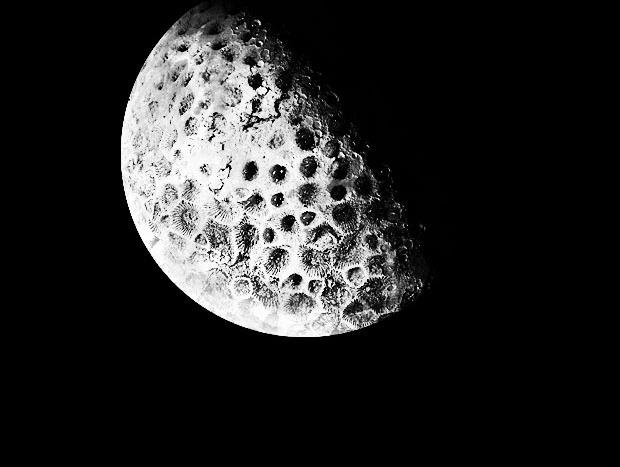
Why does this matter? The Earth isn’t slowing enough to really affect me. The day I die will be only a few seconds longer the day I was born. But taking a step back, it helps me appreciate the delicate balance that allowed me to get here. All of the things that we take for granted about our planet that allow us to live here are constantly changing. Around the time that the first creatures moved out of the water and onto land (almost 400 million years ago), the Moon was a lot closer. That means that the tides would have been much more dramatic. Perhaps having much larger tides would have helped sea creatures make their way ashore. Perhaps it is the case that without the 415-day year the ancestors that led humans ashore would have never been able to get out of the comfort of the oceans. If it weren’t for the proximity of the Moon hundreds of millions of years ago would we be mermaids instead of humans? We’ll never know, but it is always nice to think of how many different things had to go exactly the way they did in order for us to be alive today.
If you found this topic interesting, check out another Radiolab podcast, “The Distance of the Moon,” in which actor Liev Schreiber reads a story written by Italo Calvino and telling of a time that the Moon was so close to the Earth that you could jump back and forth between the two. Thanks for reading!
One of the coolest videos I have ever seen is the Powers of Ten video. In 1977 Charles and Ray Eames—the inventors of the Eames Office, a famous furniture company—in collaboration with IBM, created a video beginning in Chicago and gradually zooming out, transporting the viewer to the outer edges of the universe. Every ten seconds the video zooms out by a new power of ten. There are two main takeaways I got from this video. One is that the Earth, and myself, are extremely small. Practically nothing in comparison to the rest of the universe. The second is that as we zoom out there is a pattern rotating between a relative density of stuff to vast expanses of nothing.
The Powers of Ten video reminded me of another video I first saw just over a year ago, which represents the The Digital Universe, developed by the American Museum of Natural History’s Hayden Planetarium. It uses “data from dozens of organizations worldwide to create the most complete and accurate 3-D atlas of the Universe from the local solar neighborhood out to the edge of the observable Universe.” This video begins on Earth and continually zooms out until reaching the edge of the observable universe, 13.7 billion light-years away, before zooming back into Earth. This video had a profound effect on me. Like the Powers of Ten film, it emphasizes just how tiny and insignificant Earth is. However, as the video zooms back in, hurtling towards Earth, the placement of our beautiful planet seems perfect. All of the things that have led to life on this one speck are anything but insignificant. It helps that it is accompanied by the musical masterpiece “Time” by Hans Zimmer. The Digital Universe tool can be found on the AMNH website and is free to explore.
Welcome to Gator’s Guide to the Galaxy. Over the next four months I will be learning about the solar system and posting about things that I find interesting. I am not exactly sure what these posts will be about specifically, but I know that what they will all share in common is that they are about things I think are funky.
I am no expert on the solar system, but I am excited to learn more. One of my favorite resources for learning about all things space is Kurzgesagt, a YouTube channel that “tries to explain the universe and our existence one video at a time.” It maybe isn’t as in depth as a published paper, but it’s very accessible and I’ve found it a great place to start.
This is an example post, originally published as part of Blogging University. Enroll in one of our ten programs, and start your blog right.
You’re going to publish a post today. Don’t worry about how your blog looks. Don’t worry if you haven’t given it a name yet, or you’re feeling overwhelmed. Just click the “New Post” button, and tell us why you’re here.
Why do this?
The post can be short or long, a personal intro to your life or a bloggy mission statement, a manifesto for the future or a simple outline of your the types of things you hope to publish.
To help you get started, here are a few questions:
You’re not locked into any of this; one of the wonderful things about blogs is how they constantly evolve as we learn, grow, and interact with one another — but it’s good to know where and why you started, and articulating your goals may just give you a few other post ideas.
Can’t think how to get started? Just write the first thing that pops into your head. Anne Lamott, author of a book on writing we love, says that you need to give yourself permission to write a “crappy first draft”. Anne makes a great point — just start writing, and worry about editing it later.
When you’re ready to publish, give your post three to five tags that describe your blog’s focus — writing, photography, fiction, parenting, food, cars, movies, sports, whatever. These tags will help others who care about your topics find you in the Reader. Make sure one of the tags is “zerotohero,” so other new bloggers can find you, too.

 Gator's Guide to the Galaxy